Valle d'Itria
Visiting the Valle d'Itria: villages and beaches with distances from Alberobello

The valley in a day. Back for dinner.
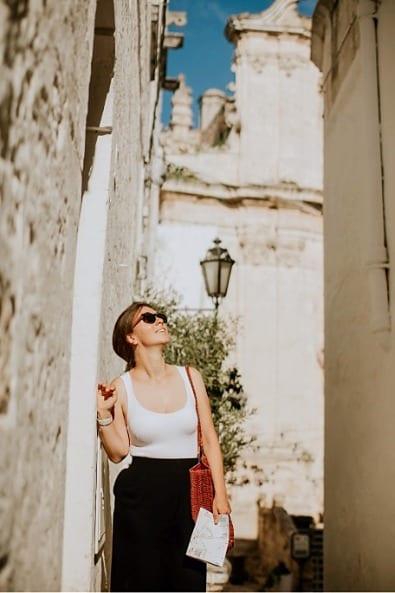
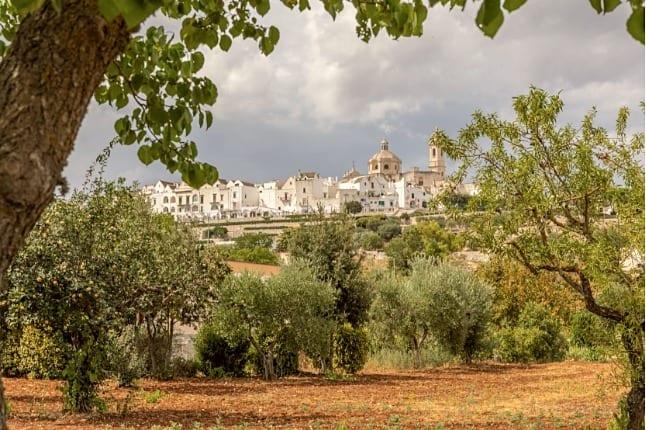
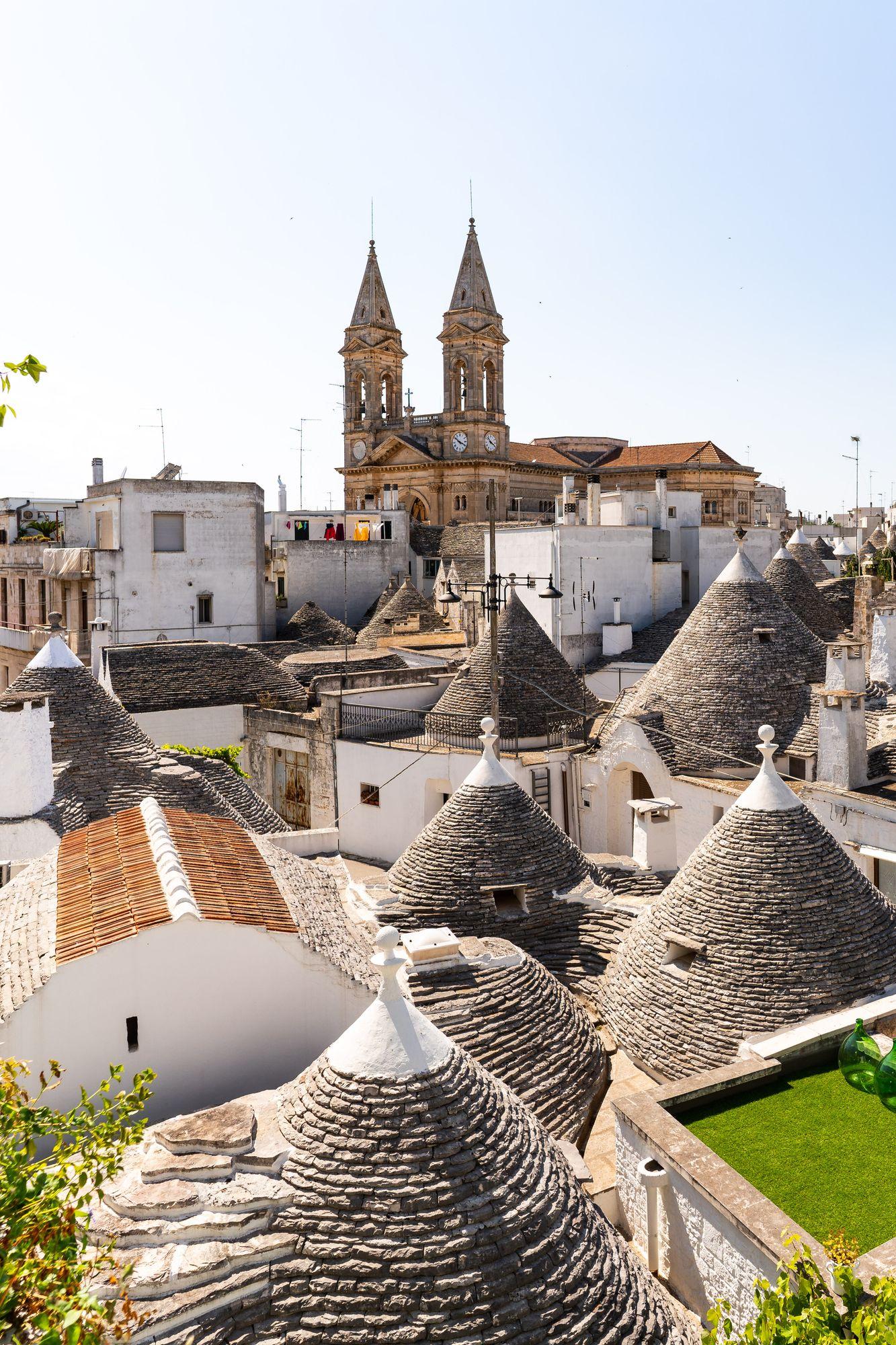
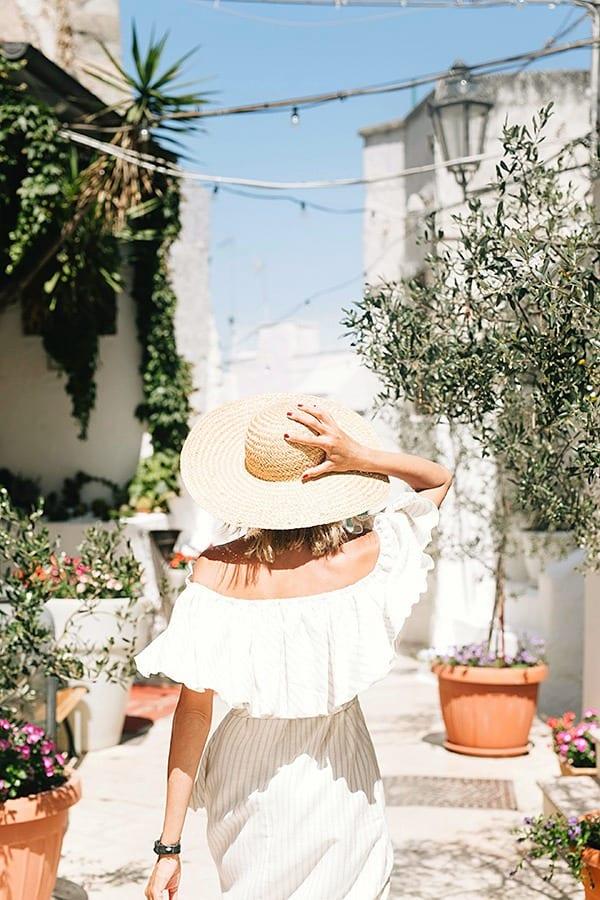
The Valle d'Itria is a slow, luminous land: trulli, masseria farmhouses, country roads among centuries-old olive trees and white houses shining in the sun. From Alberobello it is all within reach: every village within 41 kilometres, the sea from 23.
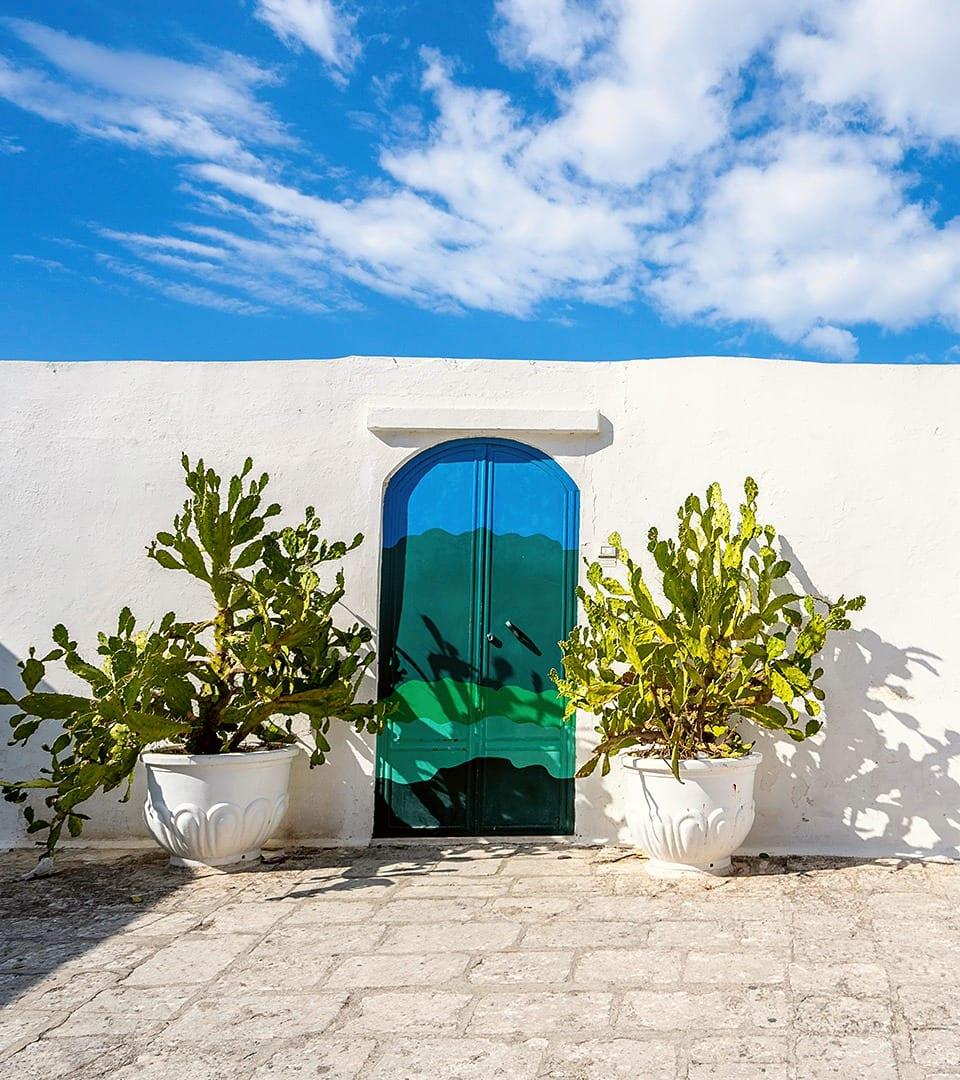
Below are the real distances, kilometre by kilometre, measured from our door. They are all you need to plan your days without surprises: a village in the morning, the sea or the hills in the afternoon.
And in the evening you come back to Alberobello: days out, evenings at the table.
Six villages, all within a day
The villages of the Valle d'Itria
A perfect white ring suspended between sky and vineyards. One of Italy's most beautiful villages: whitewashed houses, tidy alleys, balconies full of flowers. Wander without a plan and stop for a glass of the DOC white wine made here, looking over the valley from the edge of town.
Elegant and lively: a historic centre of noble palaces, Baroque churches and alleys full of life. Every summer it hosts the Festival della Valle d'Itria, which draws opera lovers from around the world. The right walk is at sunset, past carved doorways and hidden courtyards.
A small village full of character. Cisternino is famous for its fornacelle: butcher's shops with a kitchen, where you choose the raw meat and eat it freshly grilled. The old town is a maze of white stone, arches and viewpoints — ideal for dinner under the stars after a slow day in the hills.
The White City climbs its hill with lime-washed houses and lanes rising to the cathedral. From the top, the view runs from the Valle d'Itria to the sea. Best explored on foot, between artisan boutiques and postcard corners; in the evening the lights change its face.
The capital of Puglia's farmhouse cooking. White alleys, quiet squares, historic workshops: this is where you taste the famous local focaccia, the dishes of the old osterias and desserts handed down through generations. The centre keeps Baroque churches and palaces that tell the town's long story.
Overlooked by the Dentice di Frasso Castle, its towers rising above the old town. Paved lanes, ancient little churches, and all around nature reserves and centuries-old olive groves reaching down towards the sea. The right destination if you want silence and landscapes still intact.
The nearest sea, with the real kilometres
The beaches closest to Palazzo Scotto
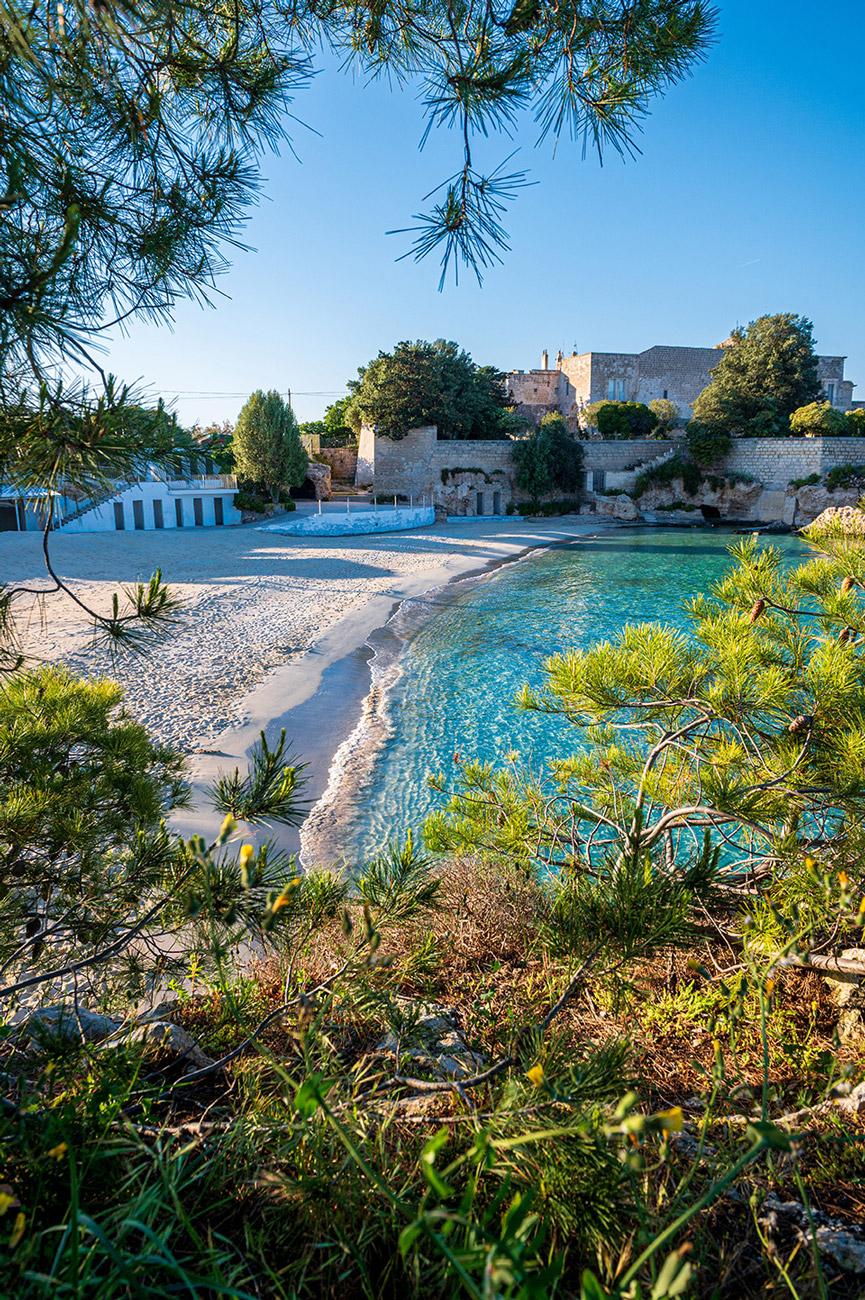
A small bay framed by the Castle of Santo Stefano, with light sand and clear water. Equipped beach clubs and a free stretch: a day at the sea in a historic setting.
Monopoli's town beach, a few steps from the old centre. Clean water, low rocks and a view of the ancient walls: perfect for a swim after a walk through the town.
The area of well-kept beach clubs: sandy shores, clear water, clubs with restaurants, sunbeds and music. A good choice if you want comfort and services.
A small fishing village with rocky coves and crystal-clear water. No long sandy stretches here, but low rocks and transparent water: ideal for snorkelling and for quiet corners. Pair it with a sea-view lunch.
Wide beaches, fine sand and shallow water: perfect if you love peace and quiet. There are also a small harbour, beach clubs and a few seaside trattorias serving fresh fish.
A stretch of free, unspoiled, wild beach. Golden sand, dunes and nature all around. Access on foot, no facilities: perfect for anyone after quiet and direct contact with nature.
The starting point is home
Alberobello sits at the centre of the valley: every place on this page is there and back in a day, without changing rooms. Which is why it is worth staying more than one night: a day for the town, one for the valley — and the sea, if your days allow it.
You leave after breakfast and return when the town empties — and home is among the trulli, away from the crowds, with the table downstairs.
What to do in Alberobello